Choosing Primary English Grammar Workbooks
A child who can speak English confidently may still lose marks on a worksheet for writing He don’t, missing a capital letter, or choosing went when the sentence needs gone. This is where primary English grammar workbooks can make a measurable difference: they turn broad classroom learning into short, focused practice that shows exactly what a child understands and what needs attention.
For Hong Kong families, the best choice is rarely simply the book with the most pages or the hardest questions. A useful workbook must match the child’s current level, support the English used at school, and offer enough repetition to build accuracy without making English feel like a daily punishment.
What a Grammar Workbook Should Actually Teach
Grammar is not only a list of rules to memorise before dictation or assessment. At primary level, it helps children make meaning clearly. They need to understand who is doing an action, when it happened, how ideas connect, and why one word choice sounds right while another does not.
A well-planned workbook usually develops skills in a sensible order. Younger pupils begin with naming words, action words, singular and plural nouns, simple sentences, punctuation and capital letters. As they progress, they meet pronouns, adjectives, adverbs, verb tenses, conjunctions, prepositions, direct speech and different sentence forms. Upper-primary pupils also need practice in identifying errors, editing sentences and applying grammar in short writing tasks.
This progression matters. A child who has not grasped the difference between a noun and a verb will find clauses and tenses unnecessarily confusing. Equally, a child who only circles answers may recognise a rule but struggle to use it in a composition. The strongest materials move from recognition to controlled practice, then ask children to write their own sentences.
Choosing Primary English Grammar Workbooks by Need
The first question is not, “Which year group is my child in?” It is, “What happens when my child uses English independently?” Year-group labels are a helpful starting point, but children in the same class can have very different needs.
If a child is still building basic confidence, choose a workbook with one clear skill per exercise, generous spacing and examples before questions. Pages crowded with several new concepts can cause guessing rather than learning. Look for practice on sentence completion, word sorting and simple error correction, followed by short sentence-writing activities.
For a child who performs reasonably well in class but makes careless mistakes, an editing-focused workbook may be more useful than another full grammar course. Exercises that ask pupils to find missing full stops, correct subject-verb agreement or select the appropriate tense develop the checking habit needed for school assessments and written work.
Children who are already secure with basic rules need application, not endless repetition. Choose books with mixed revision, short passages and writing prompts. These encourage pupils to decide which grammar rule applies, rather than relying on a page heading that gives away the answer.
For learners preparing to move from Kindergarten to Primary 1, keep expectations realistic. Grammar practice should sit alongside phonics, vocabulary, oral language and shared reading. A child who cannot yet read the instructions independently may benefit more from an adult working through a few questions together than from completing several pages alone.
Check the language level, not only the cover age
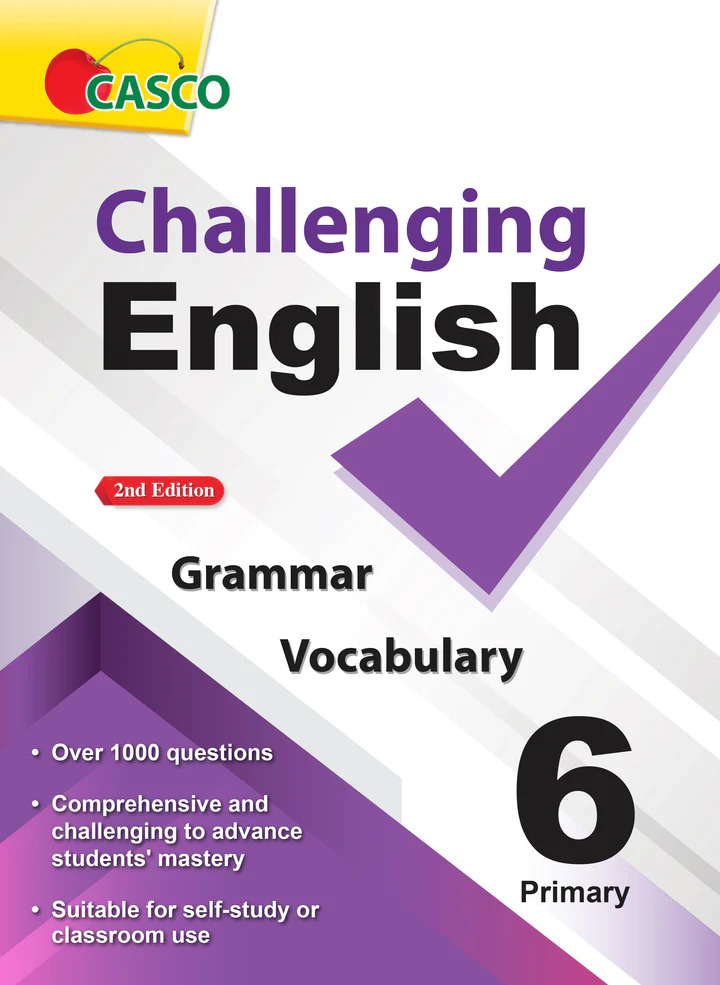
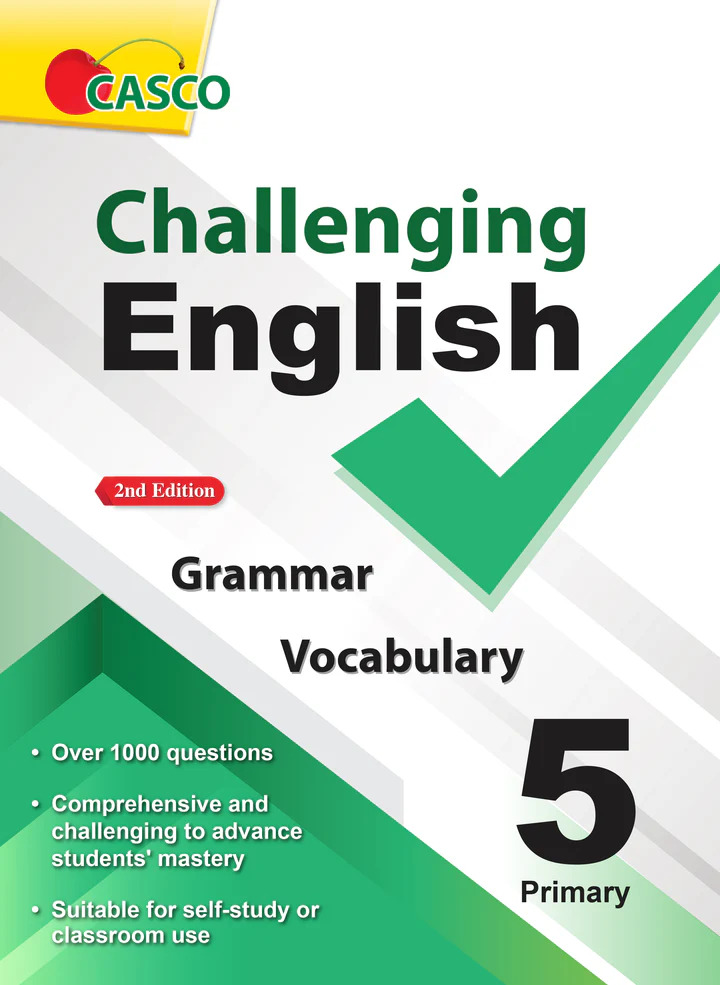
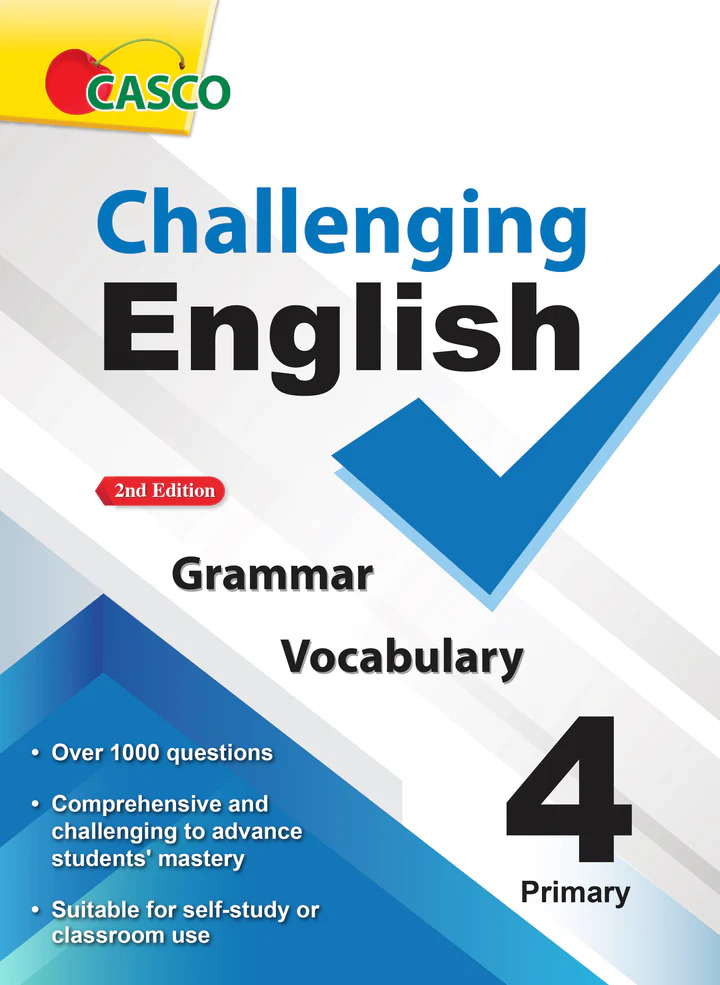
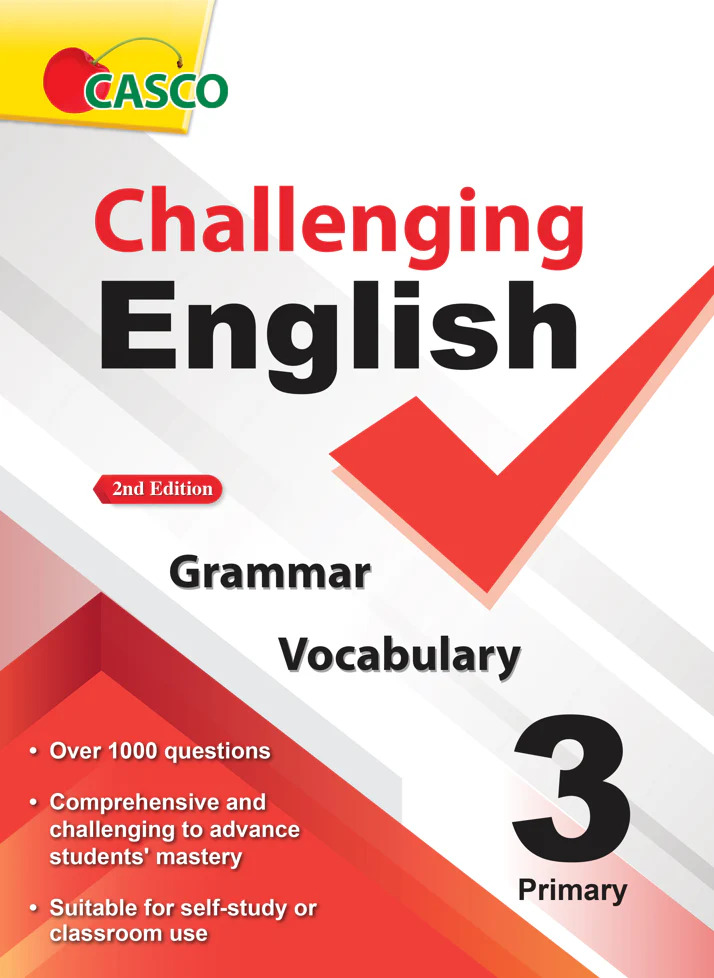
International and Singapore-based workbooks can be particularly systematic, but their sequence may not perfectly mirror a Hong Kong school’s scheme of work. Some introduce terminology earlier; others use vocabulary or contexts unfamiliar to local pupils. That does not make them unsuitable. It simply means parents and teachers should check a few sample topics before deciding where to begin.
A book labelled for Primary 3 may be ideal for a confident Primary 2 pupil needing challenge, or for a Primary 4 pupil revising a weak foundation. Starting slightly below the child’s school year is often sensible when confidence is low. Early success creates momentum; repeated failure usually creates resistance.
Look for a Structure Children Can Follow
The most practical grammar workbooks have a predictable rhythm. A brief explanation introduces the rule, examples show it in use, and exercises become gradually more demanding. An answer section is valuable, but it should support discussion rather than become a tool for rushing through pages.
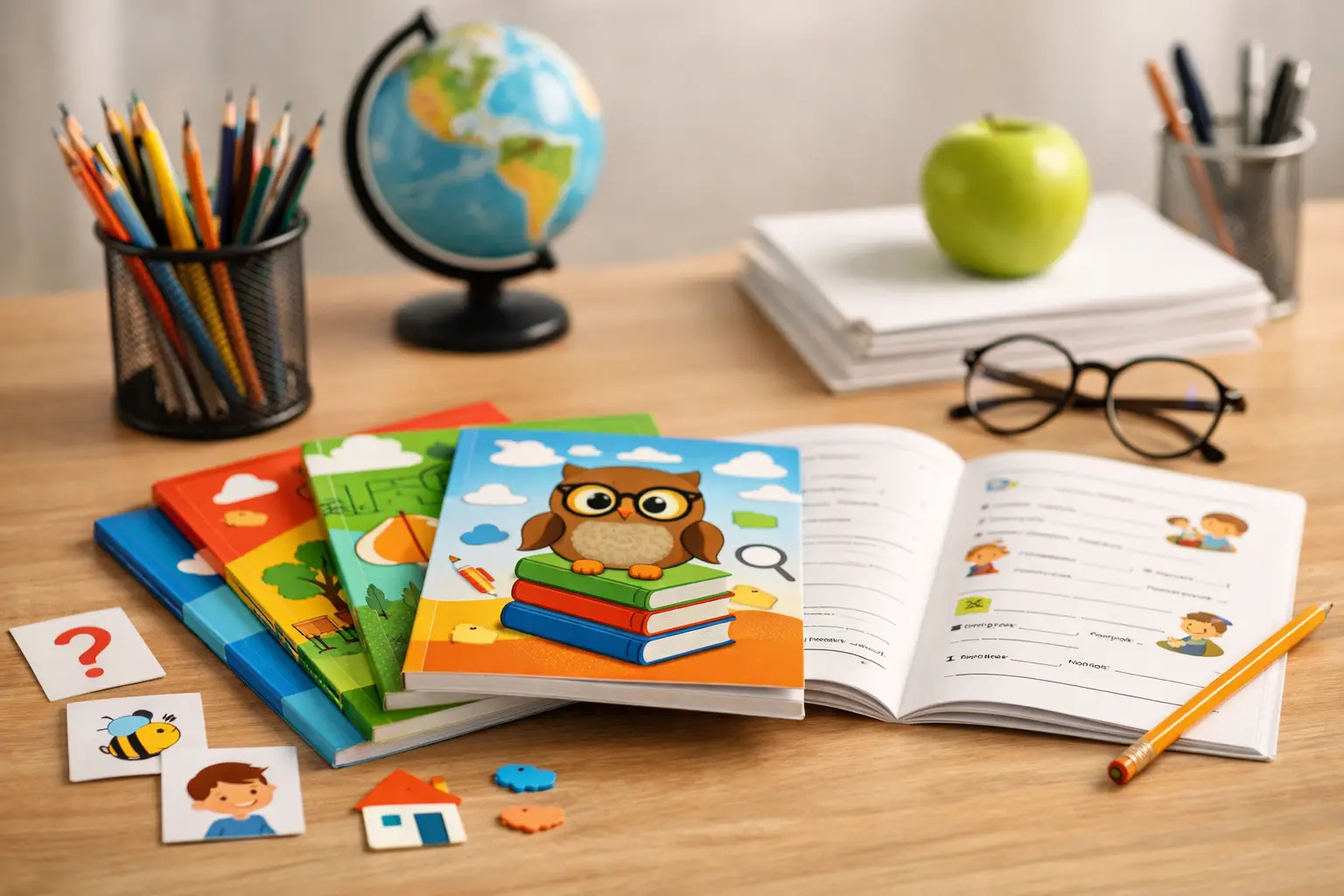
Visual design also affects whether a book gets used. Primary pupils respond well to uncluttered pages, readable print and enough room to write. Colour can help draw attention to key parts of a sentence, especially for younger learners, but decoration should not distract from the task. For home use, a workbook that can be completed in 10 to 15 minutes is often more sustainable than one designed for a long tutoring session.
It is worth checking whether the book covers British English conventions used by many Hong Kong schools. Spelling, punctuation and vocabulary should be consistent with the child’s learning environment. A resource may still contain useful practice if it includes other English varieties, but parents should explain differences clearly rather than present every variation as an error.
How Much Practice Is Enough?
More pages do not automatically mean better learning. Grammar improves through regular retrieval and correction. Two or three short sessions each week are usually more effective than finishing a large section on Sunday evening before school.
A simple routine works well. Begin with one exercise on a familiar skill, complete a short section on the new target, then revisit one mistake from the previous week. Ask the child to explain the answer aloud: “Why do we use were here?” or “What tells us this happened yesterday?” If they can explain the choice in plain language, they are more likely to apply it in writing.
Avoid correcting every error with a red pen immediately. First, ask the child to reread the sentence and identify what looks wrong. Give a focused prompt, such as “Check the verb” or “Does this sentence need punctuation?” This develops independence and keeps grammar from becoming a cycle of adult correction.
Connect exercises with reading and writing
A workbook should not be the child’s only encounter with grammar. When reading an English storybook, pause occasionally to notice a vivid adjective, a question mark or how a writer joins two ideas with because. During composition practice, choose one grammar target only, perhaps using past tense accurately or including conjunctions.
This connection is especially useful for children who say grammar is boring. They may accept that a full stop is required on a worksheet, yet only understand its value when it helps a reader follow their own exciting story. Reading widely also exposes pupils to sentence patterns that isolated exercises cannot fully teach.
Common Buying Mistakes to Avoid
The first mistake is buying several similar books at once. A tall pile can feel productive to adults but overwhelming to children. Start with one core workbook and use it consistently. Add a second resource only when it fills a distinct need, such as punctuation, editing or writing practice.
The second is choosing by difficulty alone. Advanced terminology is not proof of progress. If a child cannot use a rule correctly in a short paragraph, moving on to harder labels will not solve the problem.
The third is treating every blank answer as a grammar failure. Sometimes the real issue is vocabulary, reading comprehension or carelessness. If instructions are misunderstood, pause and clarify the language before reteaching the grammar point.
Finally, do not overlook enjoyment. A child does not need to love every exercise, but they should feel that success is possible. At SG BOOKS HK, parents and schools can compare structured resources from Hong Kong, Singapore and international publishers according to year level, skill focus and learning goal, rather than relying on a one-size-fits-all choice.
The right workbook earns its place not by keeping a child busy, but by making the next sentence easier to write, read and check with confidence.